More about the EBP™
EBP Design & Functional Explanation
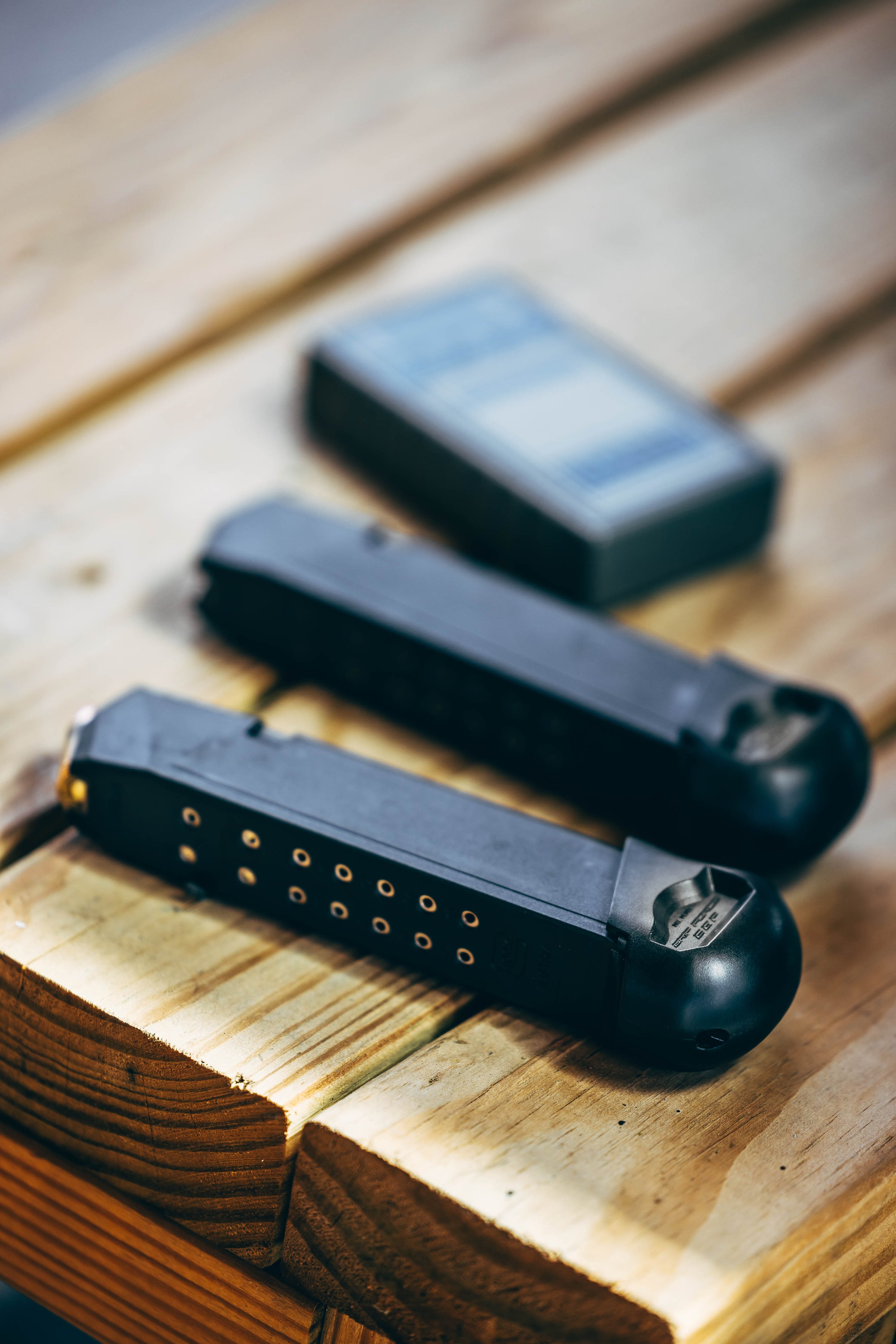
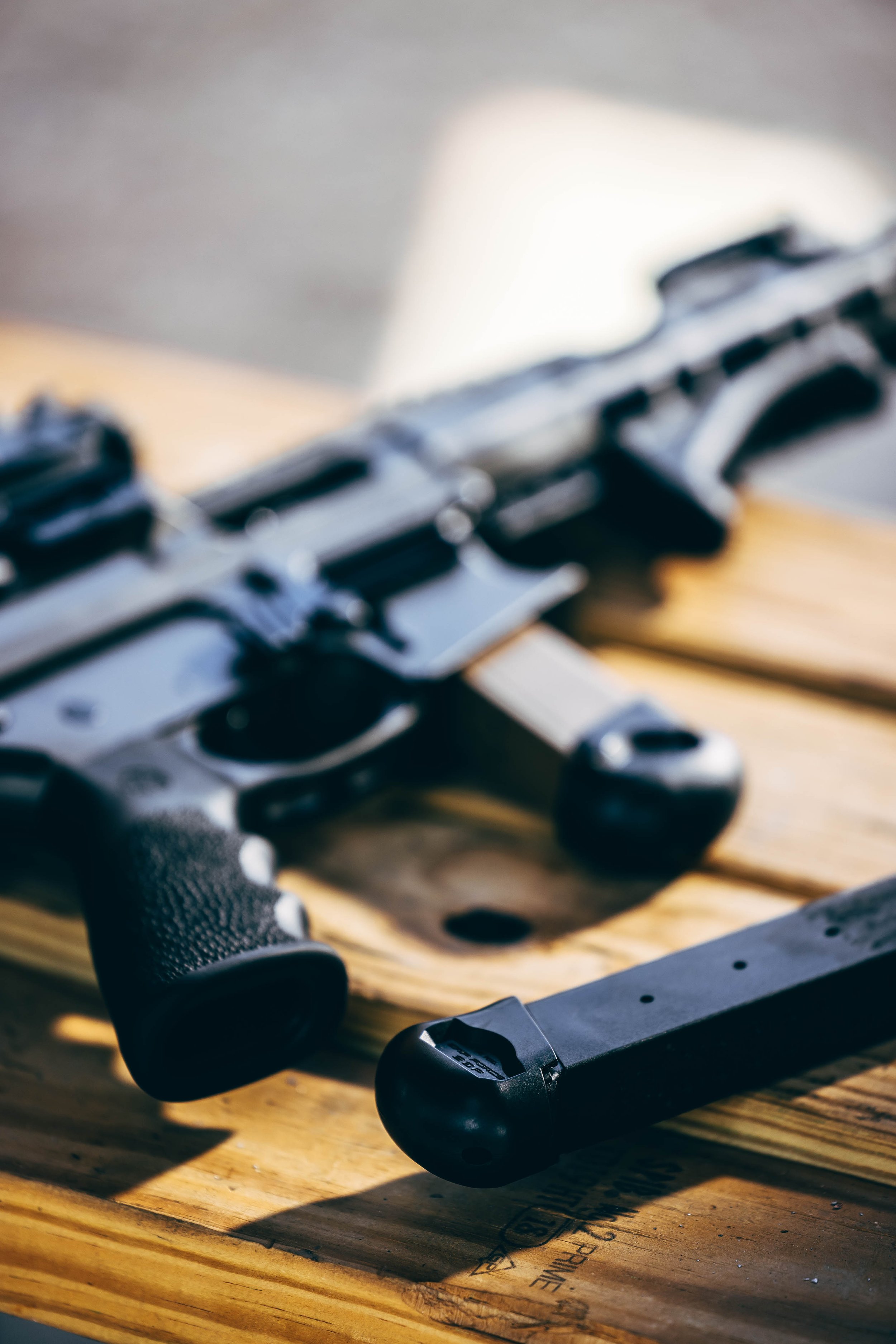
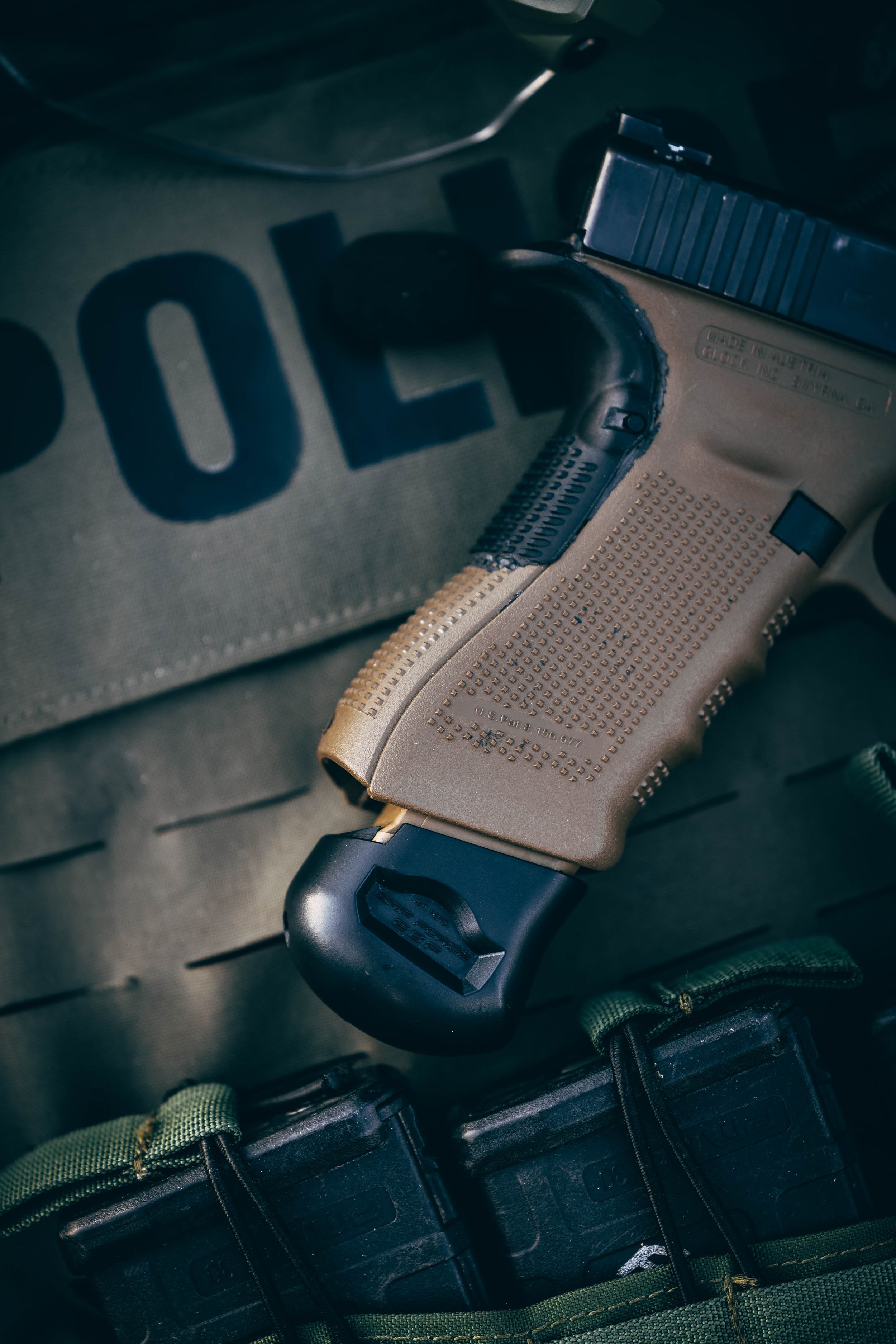
The EBP's design aims to optimize the speed and efficiency of one's reload. In developing this product, we focused on improving the equipment aspect of the reload. One can always work on their reload technique and try to make that as good as possible. Aside from getting a new/better mag pouch and optimizing its position on their belt/vest setup, one rarely looks at the other hardware aspect of the reload, the base pad/magazine combo.
Throughout our training careers, we have had the pleasure of training under some World-Class Instructors/World Champion shooters. We quickly learned that everything matters and everything is important when optimizing speed and efficiency. To quote a former World Champion shooter, "Time is the enemy!"
All of them hammered home the importance of the time factor in human performance. That saving hundredths of a second adds up to tenths of a second. Saving tenths adds up to complete seconds. Consistently stacking that amount of time in your favor when trying to save time, whether through technique or equipment improvement, can significantly impact one's performance.
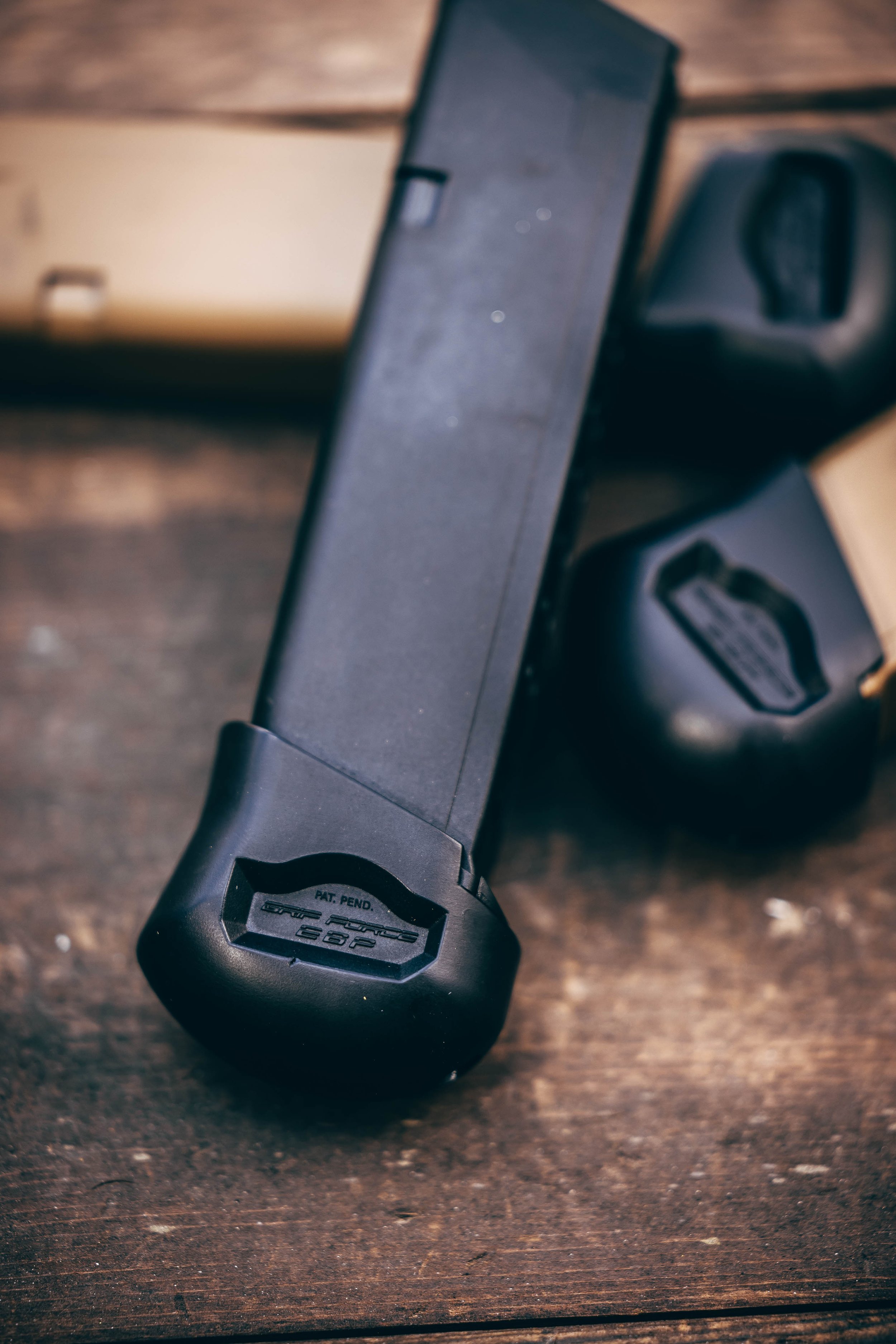
Regardless of manufacturer, when using any conventionally shaped base pad with its squared or slightly angled front, sides, and flat bottom, it does not optimally match the shape of the shooter's hand as they perform the actions of a reload, from indexing the magazine in its pouch to feeding it into the pistol. The EBP's design optimizes that fit and function.
During development, we conducted detailed video analysis of the human hand's function during the reload cycle, specifically examining how the base pad fits and operates in conjunction with the shooter's hand at speed.
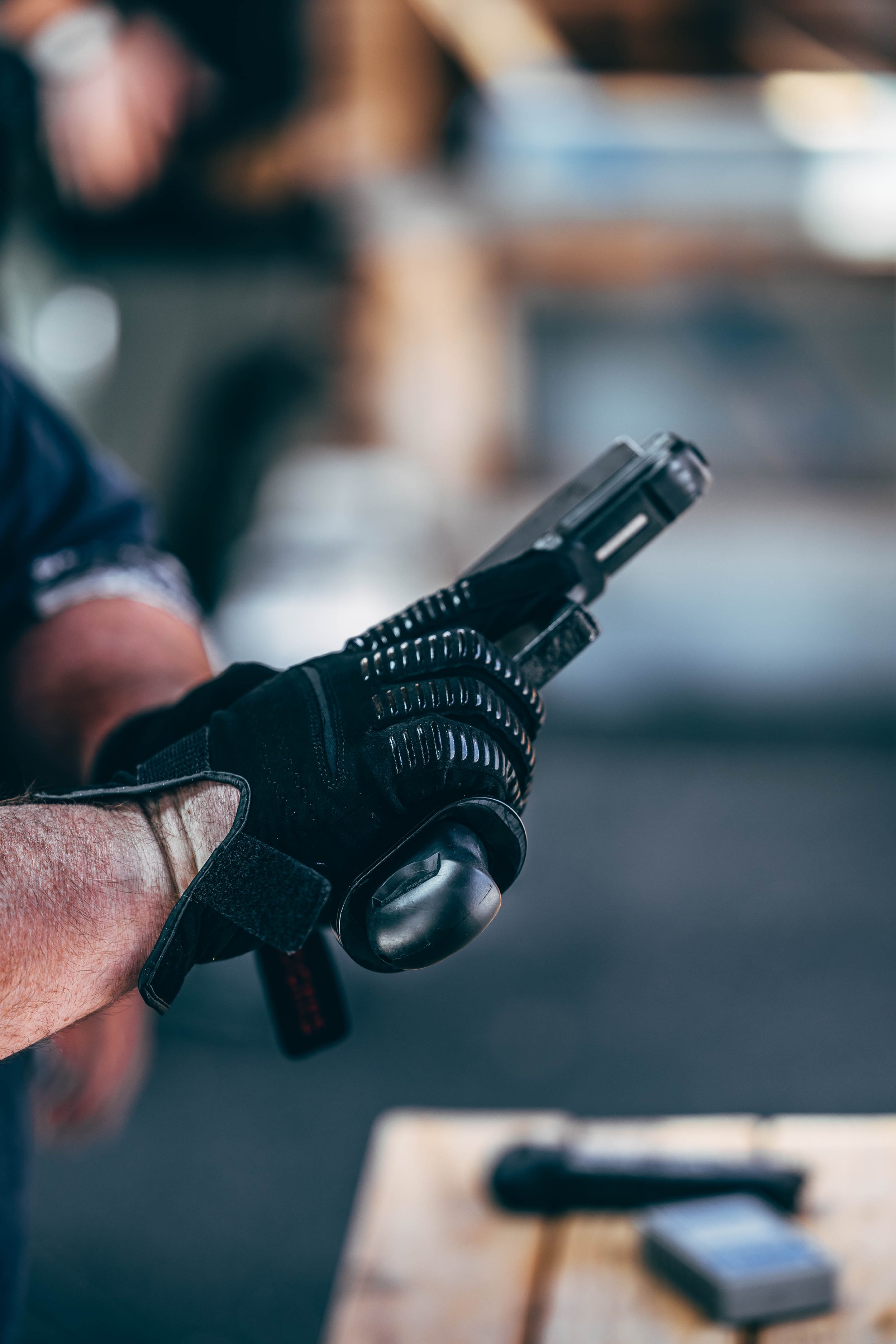
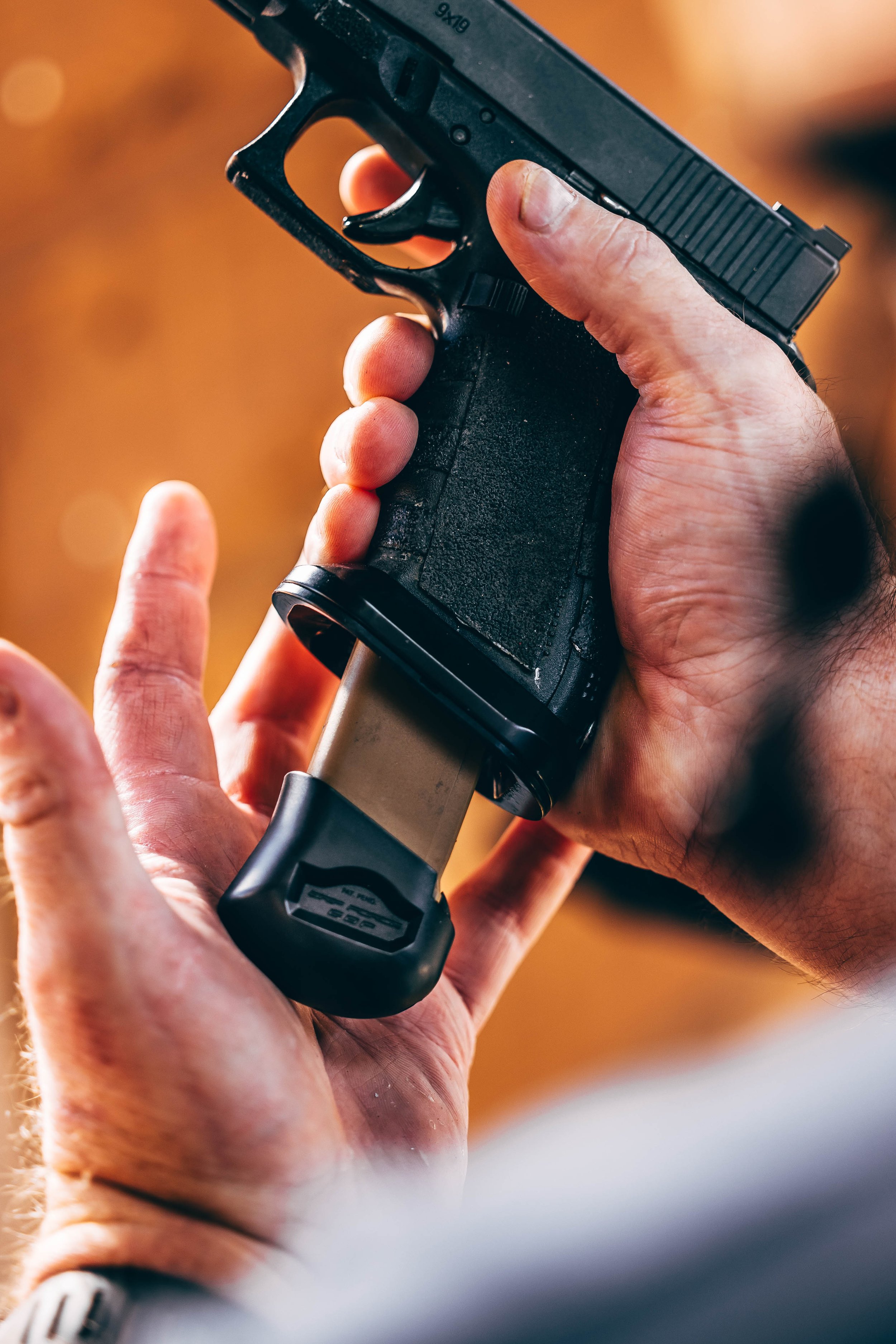
The front face section of the EBP fits the hand better as the shooter indexes and grasps the magazine. That allows for better alignment of the base pad/magazine body in the shooter's hand. That front section of the EBP is slightly curved to allow for instant correction if your hand comes into contact with the front of the base pad and it is not correctly aligned.
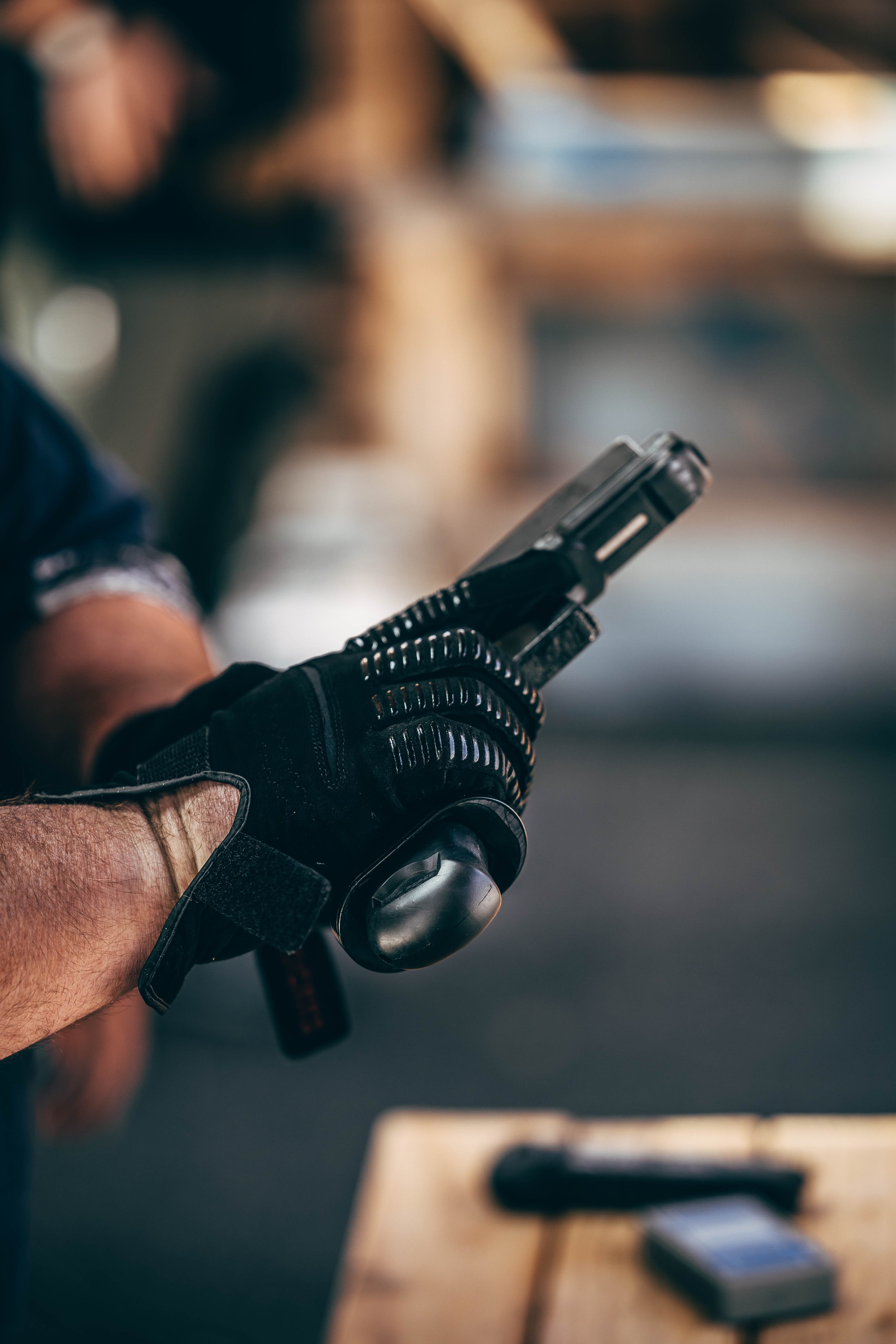
If needed, the shooter's palm can slide across the front face of the EBP until the lower (slightly pointed) section of the front face aligns with the optimal location inside the palm. In doing so, the shooter can readily feel that it is in the correct position; then, the hand completes the proper grip on the EBP/magazine.
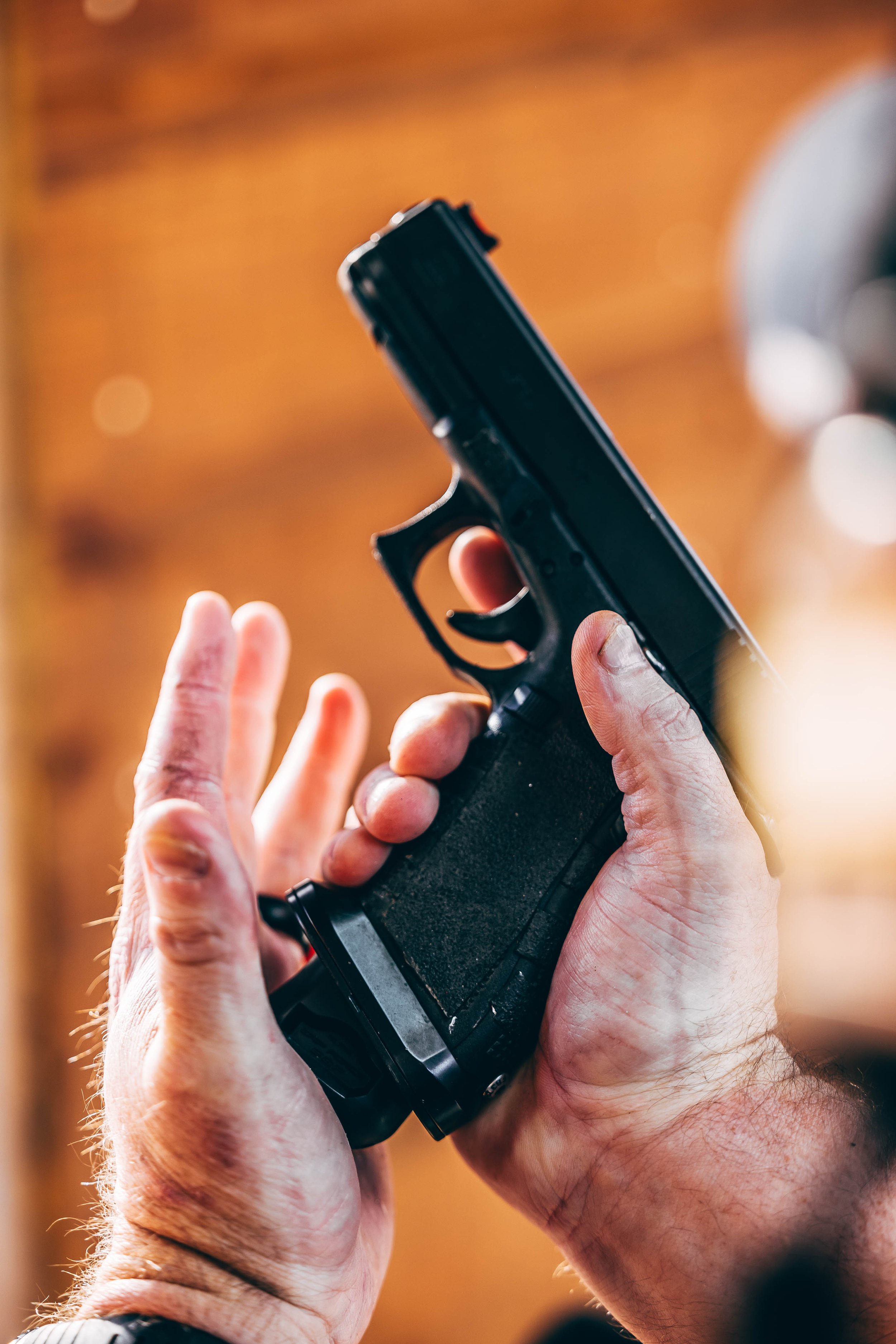
On a conventionally shaped base pad with a flat bottom, when the shooter's index finger rides along the front wall of the mag body, as they begin to feed the magazine into the mag well of the pistol, their palm is usually only touching the front lower corner of the base pad. As you push the magazine into the mag well of the pistol, there is a gap between the palm and the rest of the flat underside of the base pad until the hand fully rolls underneath it. Only at that point is there complete contact with the flat surface on the bottom.
One of the main contributors to the speed element of the EBP is that the extended and curved underside of our base pad remains in constant contact with the shooter's palm as their hand rolls underneath the magazine and feeds it into the pistol. Continuous surface contact between the hand and the EBP eliminates the gap created by the design of a conventional (flat-bottomed) base pad. All of the energy from the upward movement of your hand is directly transferred into the EBP/magazine as you insert, seat, and lock it into the pistol.
In our testing, we observed time savings during reloads when using the EBP prototypes compared to other conventionally shaped extended base pads. During end-user testing, we hope you also experience the noticeable time savings enabled by the EBP's design advantages. Using proper fundamentals during your reloads directly affects your ability to realize the speed and efficiency benefits of the EBP’s superior ergonomic design. Using a shot timer with the EBP mags vs. any other magazines with a conventional extended base pad should yield positive results with (speed & efficiency).
Based on years of testing, the results were significant enough to seek and obtain both Utility and Design patents.
The side panels of the EPB feature indented areas with bottom ledges, allowing the base pad to be more easily grabbed on the sides and stripped from the pistol. They are ambidextrous to allow the thumb of the shooter’s support hand to hold the EBP vertically, and the index finger of the same hand to grab the EBP on the opposite side in a horizontal manner. That matches the way the fingers would naturally grasp the side walls of an extended base pad.
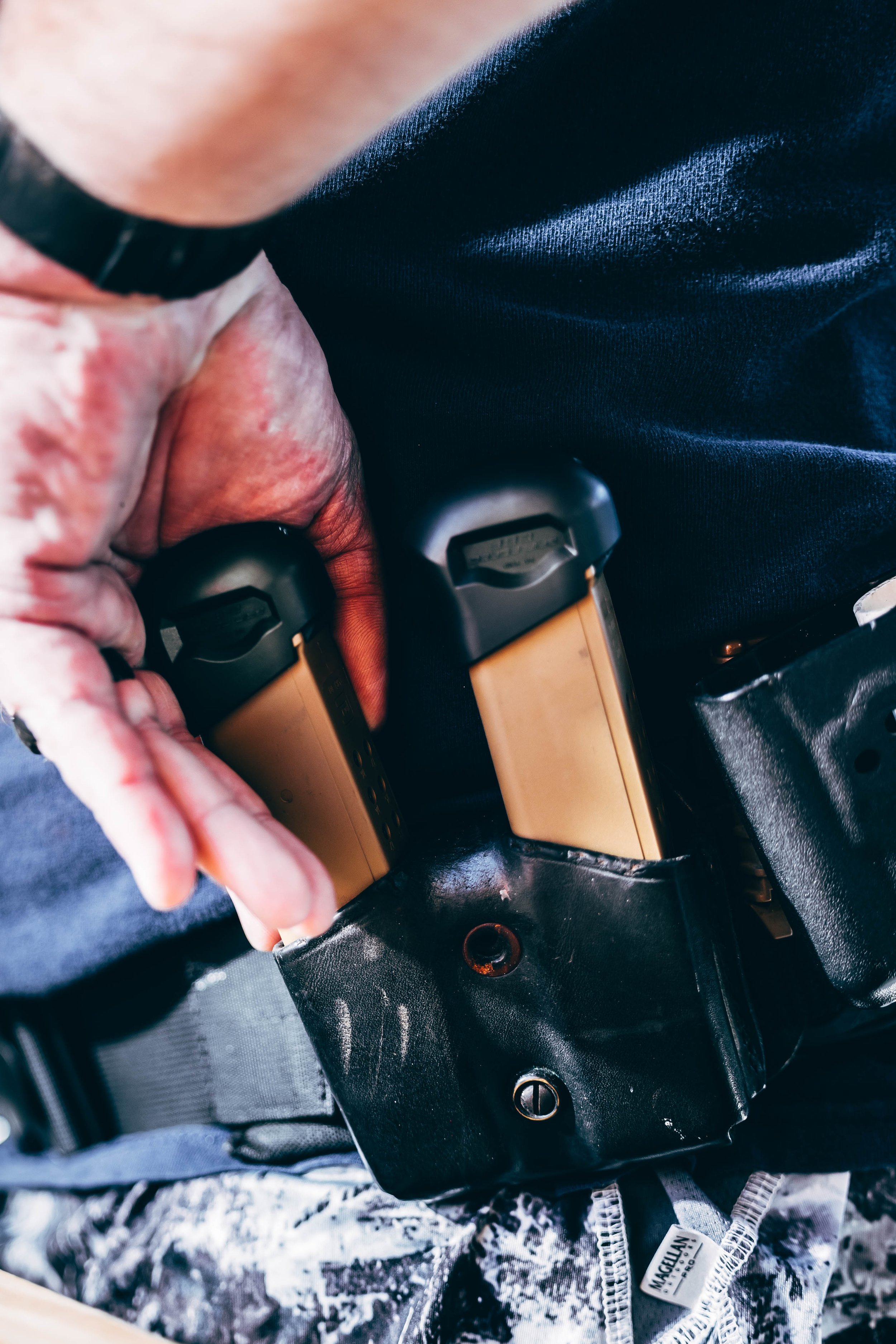
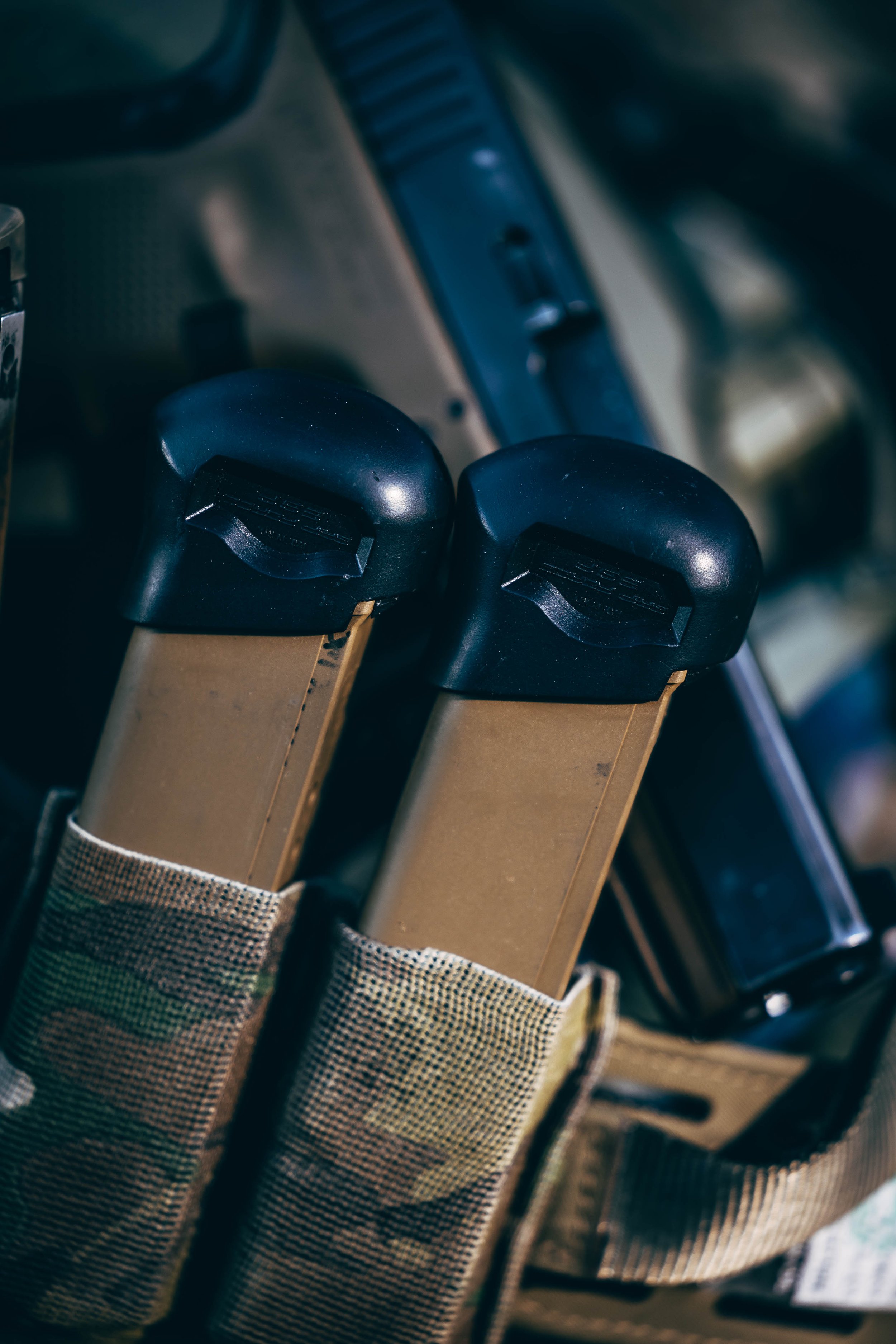
For our testing, we used different magazine pouches/positions. For one test series, we used something similar to what many competition shooters use. A belt set up with a magazine position near the centerline of the body (just to the left or right of the belt buckle, depending on whether one is right-handed or left-handed). Having a single magazine pouch in that position, slightly canted toward the outside (running it at 30 degrees seems ideal), can truly optimize the speed and efficiency of the reload.
Another position we tested was with a different open-top vertical pouch (with the magazines positioned straight up and down), both on a belt and concealed. We either had the mag pouch set on the front of the belt, about midway between the centerline/belt buckle, and the point of the hip. Or, we positioned it along the side of the hip. A lot depended on the position/size of the body armor, raid vest, plate carrier, or casual clothing.
From our early prototype stage to our current production model, the GRIP FORCE EBP was continually tested to verify its enhancement of speed and efficiency. Various tests have been conducted by US Military Veterans, US and Canadian Law Enforcement Personnel, and Civilians.
We hope this addresses some frequently asked questions about the EBP's design parameters. We appreciate your interest in our product. Take care, train hard, and stay safe.
GRIP FORCE USA
Designed, Developed, and Manufactured in the USA.
FIT = FUNCTION